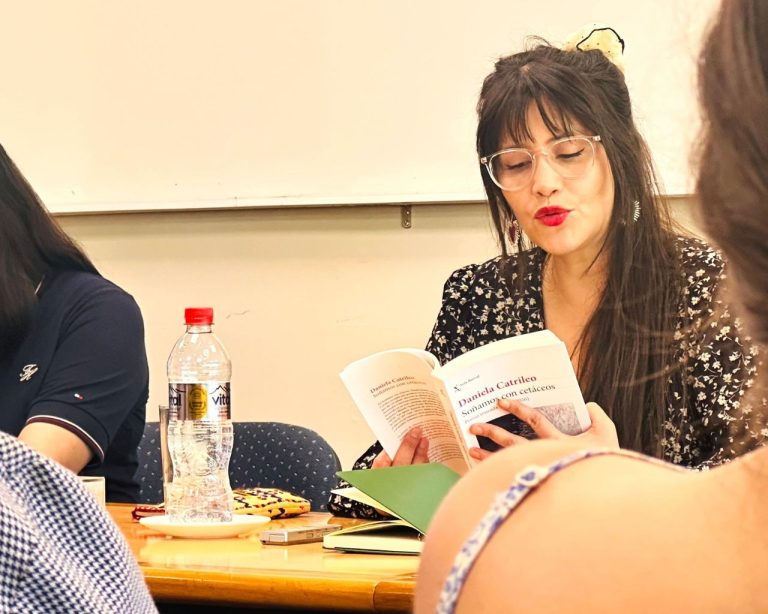
 Daniela Catrileo gave a symposium and spoke with students in Talca
The day included two events open to the community where the writer presented her new book, "Dreams with Cetaceans," which…

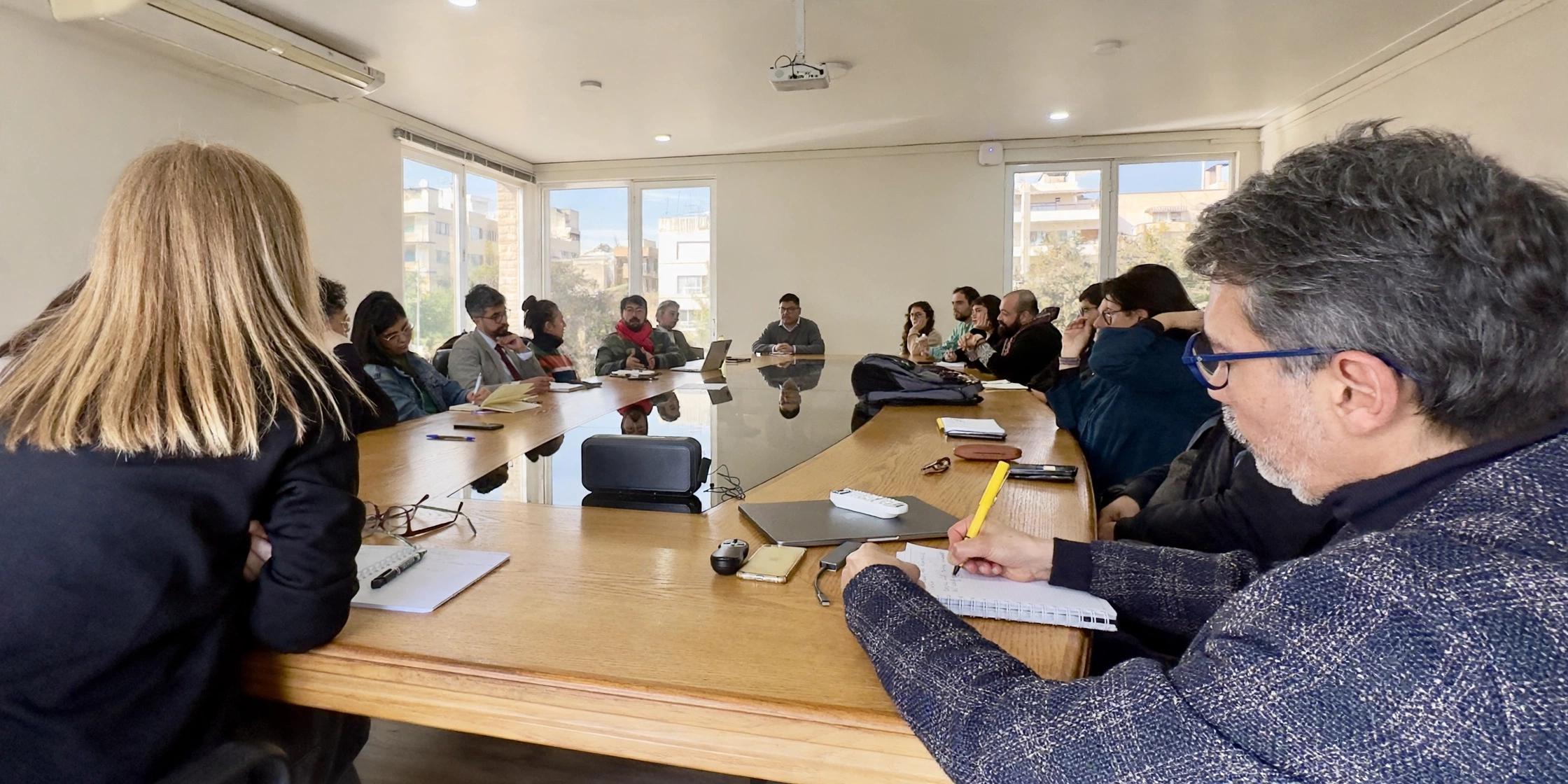
Founded in 1987 under the symbolic name of the Jesuit and Maule-born naturalist Juan Ignacio Molina, this institute represents the humanities both within and beyond our university from a multidisciplinary perspective. This academic unit conducts research through projects and publications, and offers undergraduate teaching through the Foundational Training Program and graduate teaching through the Doctoral Program in Human Sciences in conjunction with the Faculty of Psychology.
-It has “Universum”, an academic journal of Humanities and Social Sciences.
-Edits Tralka Magazine for science communication with emphasis on the Humanities, Arts and Social Sciences (HACS).
-Advisor to the Heritage Documentation Center.
-It organizes conferences, colloquiums, symposia and lectures.
-It offers the Doctorate in Human Sciences in consortium with the Faculty of Psychology.
"The unit develops undergraduate teaching activities in subjects taught to all students at the University. It also participates in the Doctorate in Human Sciences program, conducting research and publishing through competitive projects."
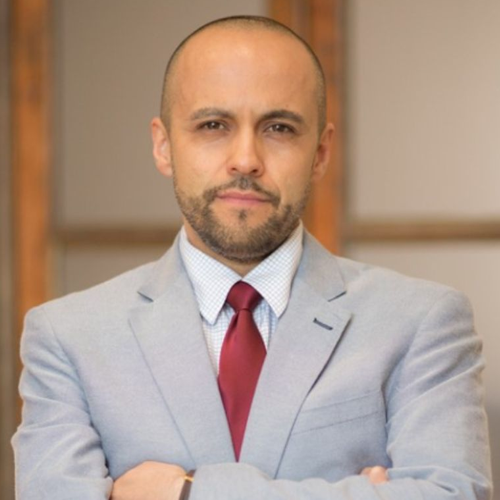 Victor Brangier Peñailillo
Description of the program
To train autonomous researchers capable of producing and communicating knowledge that contributes to the understanding of human behavior and its symbolic expressions in its sociocultural and historical context, based on the epistemological and methodological foundations of advanced research in Human Sciences.
Program objectives
Specific objectives
– To provide advanced human capital in Human Sciences for the region and the country that works in both academic settings and other public or private institutions.
– To contribute to the academic development of the disciplines of the Humanities and Social Sciences, providing PhDs who possess a broad and interdisciplinary vision of the human being combined with specialized knowledge in one of the following areas:
– To contribute to the progress of scientific knowledge in the Humanities through the production of research with international impact.
The Diploma in Cultural Heritage Project Management, offered by the Heritage Documentation Center of the Juan Ignacio Molina Institute of Humanistic Studies, is a virtual, synchronous program that professionalizes the enhancement of cultural heritage collections with a territorial focus. Over its five months, it trains participants to design, finance, and communicate sustainable initiatives. The curriculum addresses current regulations, the design and planning of heritage management projects, integrating a participatory approach with communities, and communication and audience development strategies. Furthermore, it innovatively incorporates the critical use of artificial intelligence applied to research and project writing. This flexible, nationwide training program presents a key opportunity for managers and professionals seeking to lead with technical rigor and social relevance in safeguarding local cultural identities.
Director of the Juan Ignacio Molina Institute of Humanistic Studies
Doctor in History
Associate professor
victor.brangier@utalca.cl
Doctor of History / Academic Secretary
Assistant Professor
ltorres@utalca.cl
Doctor of Logic and Philosophy of Science
Associate Professor
milopez@utalca.cl
PhD in Latin American Studies / Director of Universum Magazine
Assistant Professor
alejandro.viveros@utalca.cl
Teaching Coordinator
Lecturer
mvillenas@utalca.cl
“Universum” originated in 1986 as an academic publication of the Abate Molina Institute at the University of Talca. Its objective is to stimulate reflection and discussion on original research, conducted both nationally and internationally, focused on the various fields of the Humanities, Arts, and Social Sciences, with special emphasis on literature, philosophy, history, and cultural and social studies, as well as to promote the dissemination of the results of such research.
Director: Alejandro Viveros Espinoza
Universum accepts articles and book reviews for publication in Spanish, English, and Portuguese.
Articles published in Universum are indexed or summarized by:
+ Scopus
+ ESCI (WoS)
+ SciELO Chile
+ Latindex
+ ERIH PLUS
+ DIALNET
+ DOAJ
+ PROQUEST
+ LatinREV
Universum is a fully open access journal, so all its articles are available online, without payment or subscription requirements, for both its authors and readers.
It is a science outreach magazine from the Arts, Humanities and Social Sciences (HACS).
General Editor: Eduardo Bravo Pezoa
Tralka Magazine is a digital publication dedicated to fostering positive connections between academia and the community on topics of common interest in history, heritage, archives, and culture. It defines itself as a pluralistic platform, respectful of freedom of expression and information, that encourages critical discussion and decentralized reflection within the humanities.
We invite you to participate in our discussion of topics.
Send your questions and contributions to revistatralka@utalca.cl
Follow us on Instagram @revistatralka
Daniela Catrileo gave a symposium and spoke with students in Talca
The day included two events open to the community where the writer presented her new book, "Dreams with Cetaceans," which…
 Competition invites students to observe and transform their environment
With the aim of connecting academic knowledge with the challenges of the Maule region, the Juan Institute of Humanistic Studies…
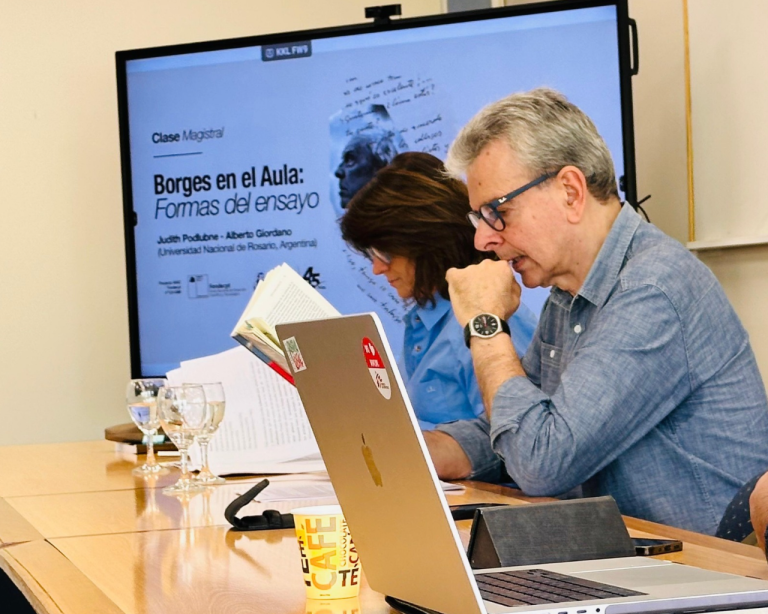 Researchers analyzed Borges' essayistic side
Academics Judith Podlubne and Alberto Giordano from the National University of Rosario, Argentina, analyzed the writer in seminars organized…