Seminar addressed challenges of teaching in the digital age
The event brought together national and international specialists to reflect on the impact of artificial intelligence, mental health, and the new demands facing the educational community.
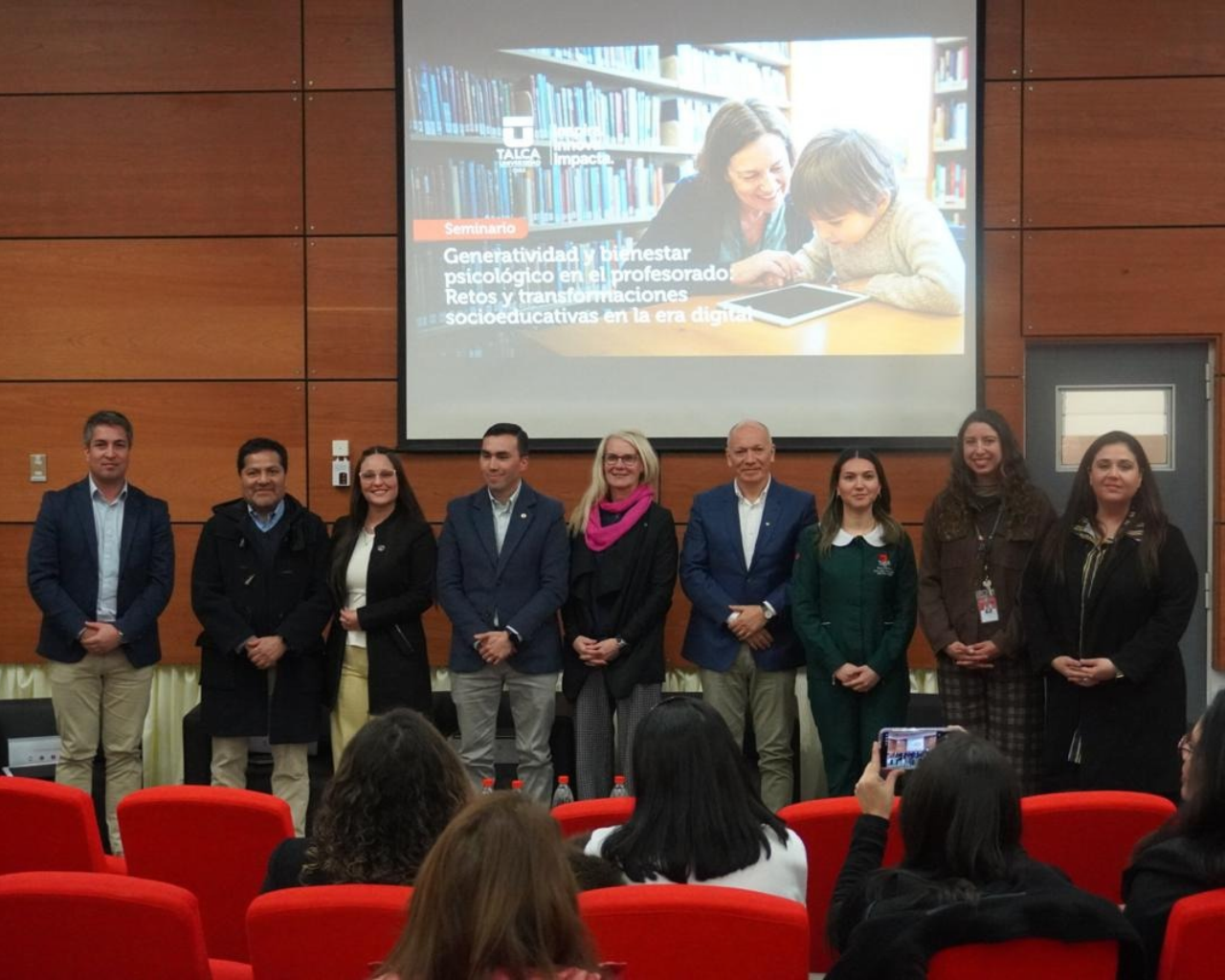
The challenges of the digital age in teacher development and the transformations in the teaching-learning process were the focus of the seminar "Generativity and Psychological Well-being in the Teaching Profession," an event that brought together nearly 200 professionals in the field in the auditorium of the Faculty of Education Sciences of the University of Talca, on the Linares Campus.
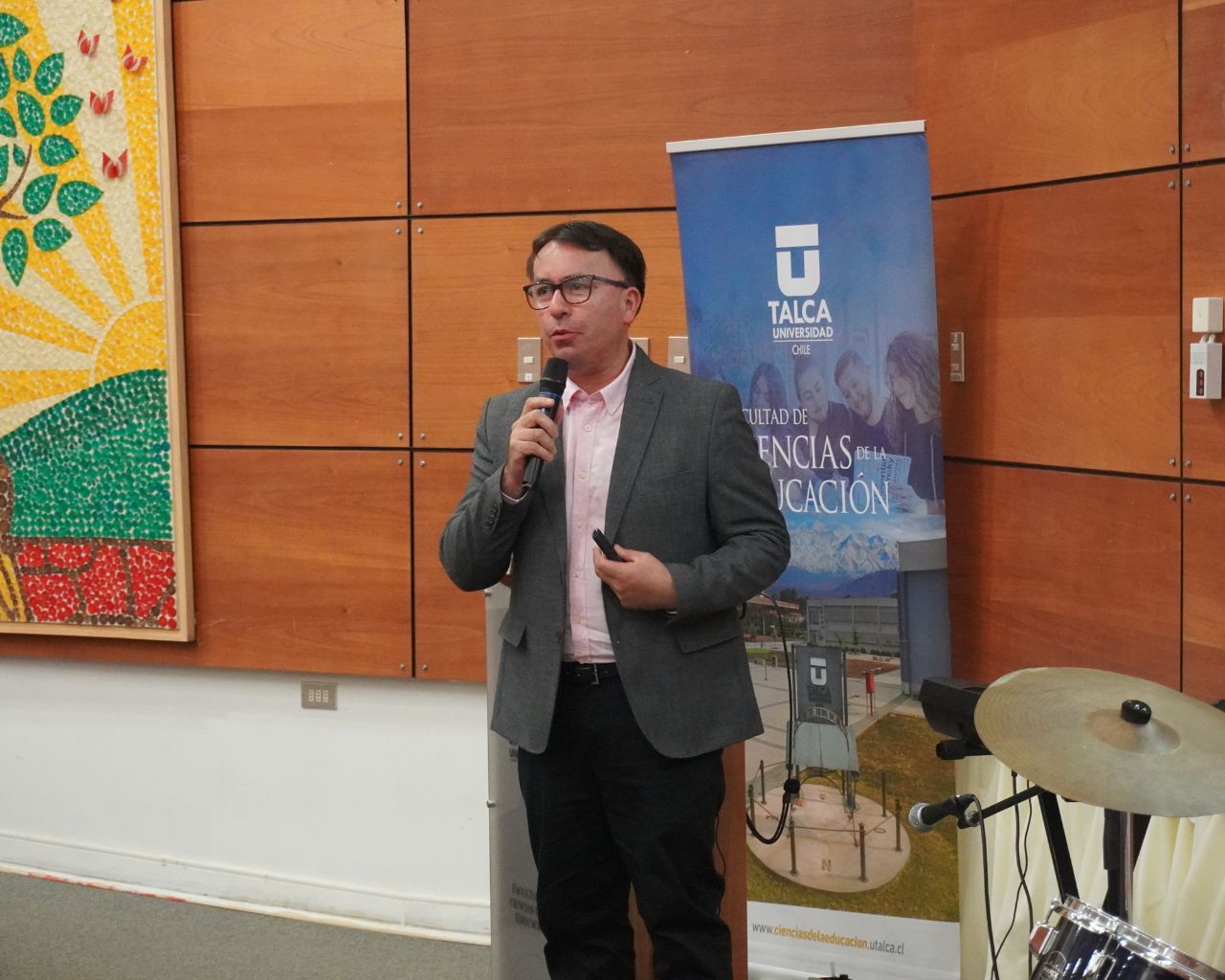
During the meeting organized by UTalca in collaboration with the American Psychological Association (APA), the Global Psychology Alliance and the Ibero-American Institute for Sustainable Development of the Autonomous University (UA) of Chile, the dean of the aforementioned Faculty, Mauricio Veliz Campos, addressed the problems that the growing presence of technologies in the school environment represents for educators.
In that sense, the academic argued that these tools can “be a tremendous pedagogical support”, but also “an enemy of learning and the socialization of students”.
“It all depends on how we use them,” noted Veliz, who assured that UTalca is implementing various measures to prepare future teachers for these challenges “through the curriculum, that is, how we incorporate the modules, knowledge, and skills within the training processes, and we are doing so with our new curriculum redesigns,” she added.
The day also included the talk “A Panoramic View from the APA: Childhood, Education and Mental Health”, given by the Senior Director of International Affairs of said entity, Amanda Clinton, who warned that among the challenges that teachers face due to the use of intelligence platforms is “a reduction in their reasoning or problem-solving ability”.
In response, Clinton recommended monitoring the use of digital devices and social media to safeguard the mental health of children and adolescents. "It requires collaboration between parents, schools, and young people to control it and establish appropriate social norms," the specialist stated.
It is worth mentioning that during the day the results of the Fondecyt Regular Project No. 1250213, “Socio-pedagogical implications of generativity in the commitment and psychological well-being of basic education teachers: ways to rethink the pedagogical function in the digital society”, led by the academic of the UA, Eduardo Sandoval-Obando, were presented, in which the dean Véliz participated as an associate researcher.
One of the main findings of the study was the existence of a high rate of anxiety among teachers, mainly associated with social pressure and uncertainty generated by the academic performance of students in evaluations such as the SIMCE or the PAES.
“Anxiety in teachers in these contexts of standardized testing has an effect on decisions and pedagogical practices,” observed Véliz, who assured that teachers even change “their methodologies, their focus, their class structure and their teaching strategies,” which reflects how psychological well-being can affect teaching work.
Livian Alegría, a teacher and head of the Technical-Pedagogical Unit at the Federico Heise Marti High School in Parral, praised the creation of these types of initiatives, which allow us to observe "how we can work with our teaching staff so that this same data and information that we have today does not create pressure on teachers, but rather becomes a tool for professional well-being."
Meanwhile, Antonieta Muñoz Soto, a preschool teacher at the Maule Educational Complex, stated that “attending these types of events is crucial, as it allows us to acquire more tools to continue strengthening what happens in the classroom and to reinforce learning.”